Initially, I was going to write: I don't know if I can do this, it might fail, blah blah blah, but you know what? Screw the negativity! Let's make this more positive and just start it off right. I'm going to do this, it's going to be a thing, and I'll do my darn best.
I'm going to attempt to Blog 180. But my way.
Basically, they told us about this in grad school. The concept is to write a post every day of school, which ends up being about 180 days.
Here's my plan and goal: I'm going to Cartoon 180. I have some new notebooks ready to go, and this will be a way for me to reflect on this year and stay creative and push myself to think about my teaching practice. I have been teaching for 5 years and it needs to happen. I need to try new stuff and this is how I'm going to attempt to do that and actually record it. Here's a few things.
1. I want to do a daily doodle.
2. Posts will be short. Usually anyway.
3. I want to reflect and how things went and not vent.
Hopefully, this will happen, I will love it, and I won't be making extra work for myself.
Ha. Ha. Ha.
Anyway, who else wants to Blog 180 with me?
Friday, August 16, 2019

Wednesday, May 8, 2019
End of Year Entertainment
This is going to be a short post, but I had to do it. Initially, I was making this playlist on Youtube, but I moved it over to Google Music for less ads/interruptions. If you didn't know, I love puns, so I decided to make a physics punny playlist, and yes I will be updating it for a while. It's May, how else will I survive? I will be posting a few other things later this week, but for now, enjoy a physics class playlist.
Thursday, January 24, 2019
Podcasting in Science Class?
We recently got an email about an NPR competition where you could make a podcast with your students. Now I don't know if you knew this about me, but I really want to make a podcast. My sister and I have been working on a crafting podcast, and I feel like it would be a great way to do some cool educational stuff. The competition is about either having the kids do the interviewing or to interview kids or something like that. Basically, with your students, make a podcast.
And this led me to thinking: how else can I use podcasting? So I did a little research, and the NPR website had some helpful links and ideas. However, I found it a little disheartening to see that their lessons were like an hour to 40 minutes long each, and I realized they were designed for elementary school students assuming they didn't have any idea of what a podcast is. I'm assuming my students have seen/heard of one before, so that barrier doesn't super exist.
The next level of research was to try and find lesson ideas. Here's where stuff gets crappy. There are tons of ideas for language, English and History teachers, which makes sense. Those are classes where you sometimes have to put yourself in the place of characters or imagine living in a different time and place. Science can be like that, but that's not usually what or how we evaluate student learning. So I'm coming up with my own list of ideas for having students use podcasting in my class, and I want to try a few of them out.
And this led me to thinking: how else can I use podcasting? So I did a little research, and the NPR website had some helpful links and ideas. However, I found it a little disheartening to see that their lessons were like an hour to 40 minutes long each, and I realized they were designed for elementary school students assuming they didn't have any idea of what a podcast is. I'm assuming my students have seen/heard of one before, so that barrier doesn't super exist.
The next level of research was to try and find lesson ideas. Here's where stuff gets crappy. There are tons of ideas for language, English and History teachers, which makes sense. Those are classes where you sometimes have to put yourself in the place of characters or imagine living in a different time and place. Science can be like that, but that's not usually what or how we evaluate student learning. So I'm coming up with my own list of ideas for having students use podcasting in my class, and I want to try a few of them out.
- Instead of writing out arguments, record them
- Research on a topic and share it out
- Give results of an experiment
- Share out about a volunteer experience (specific to something like APES or Environmental Science)
- Interview family members about energy usage or for some kind of genetics project
- Observing a physical concept in daily life
This list is not nearly as extensive as I would like, so hopefully I can add to it and get more ideas soon.
Sunday, January 20, 2019
Let's Make Grading Homework Smarter-Better-Faster-Stronger
I'm a new mom and a teacher, both of which are time consuming and rewarding. Saying that, I've been trying to find ways to squeeze as much out of my workday in terms of time as I can to make it so I have more time at home focused on family. I also want to find ways to give students better, more timely and more focused feedback. Now herein lies a conundrum: what can I use to do this? Should I stick with my tried and true homework grading method or should I try a new application of edtech? Which has the highest benefit to students and myself?
Tried and True
I can't take credit for my current system. I totally stole parts of it from my mentor teacher when I was a student teacher, old and current teaching team mates. Each table has a folder. One side is for students to turn in work, the other side is for returned work. In the folder are also their Plickers (plickers.com) which they use every day for feedback and attendance. Right now, I do a quick skim of their homework for completion, give them the appropriate stamp and then enter it into my paper gradebook. My paper gradebook is actually the seating chart, and I highlight any grade that isn't full credit. That way, I enter those grades into our online system and autofill full credit for every other student.
Pros: It's fast and efficient to do marking by seating chart. Students get feedback faster, and I have less of an issue of late work not getting marked as late. I also have two copies of grades (hard copy and digital) in case a student has an issue and needs to check in with me.
Cons: I have to go through and transfer information from one source to another, which means mistakes happen. Also, when a student submits late work, I have to mark it on the paper and then remember to transfer it to the digital gradebook. Basically, there's a larger margin of error with this method. Anything that has human input tends to have this.
A New Idea
Our school uses a multiple choice system called Gradecam. It's great for tests and we've just started using for quizzes, and there is a rubric option which we will be using for giving students point values for their short answer questions on tests to eliminate the human adding error I usually have. I'm pretty good, but I'm not perfect. I've seen some interesting applications of Gradecam to do lab notebooks and homework by giving students a laminated copy of the form, and I'm curious about this. The basic idea is you mark their score on the form with an Expo marker, scan it and give them their notebook back.
Pros: Grades get quickly entered into the digital gradebook, and you still have some separation based on like different parts of the criteria if you want if it's a rubric form. Data is nice. I like data. Plus, the lab notebook part sounds awesome.
Cons: There's a lot of work to set up, and I wonder if it would be a new assignment every time and how much planning would it take. Also, like making Plickers work, would I have to do a ton of paper set up as well? Like the laminated ones sounded fantastic, but how much work is that for me.
Online Homework
A few other options could be based around the concept of online assignments. One would be to buy a license through a company and have students complete all work through that. Another would be to have them upload those assignments to Google Classroom or Turnitin.com, both which have really strong submission softwares. It's becoming increasingly easy for kids to do work on their computers, and with an increase in touch screens on like everything (including this laptop), showing work is easier than ever.
Pros: Less paper is always good, for me and them. I already use Google Classroom for a ton of stuff, and Webassign has a database of problems that we could just pick through. I also had a few students submit their homework accidentally on Google Classroom early on, so they already have a concept of how to do it.
Cons: Programs like Webassign are costly, and I wouldn't want to make a ton more work or equity issues for students who might not have the ability to scan/photograph work and upload it. Kids are also so used to turning in hard copies, I feel like a few weird errors would come up that I couldn't foresee.
My Conclusion as of Right Now
As it stands, I'm sticking with tried and true. I am going to meet with some teachers that have used some of these methods to streamline work submission and get advice for next year. I might try a few things out, like making some online Google Form quizzes and see if that would be realistic to do. I also have made a form for students to create like "problem write ups," so that could be fun to play around with. Basically, we have a work in progress, but I like feeling inspired by this kind of stuff.
Because I am a weirdo.
Tried and True
I can't take credit for my current system. I totally stole parts of it from my mentor teacher when I was a student teacher, old and current teaching team mates. Each table has a folder. One side is for students to turn in work, the other side is for returned work. In the folder are also their Plickers (plickers.com) which they use every day for feedback and attendance. Right now, I do a quick skim of their homework for completion, give them the appropriate stamp and then enter it into my paper gradebook. My paper gradebook is actually the seating chart, and I highlight any grade that isn't full credit. That way, I enter those grades into our online system and autofill full credit for every other student.
Pros: It's fast and efficient to do marking by seating chart. Students get feedback faster, and I have less of an issue of late work not getting marked as late. I also have two copies of grades (hard copy and digital) in case a student has an issue and needs to check in with me.
Cons: I have to go through and transfer information from one source to another, which means mistakes happen. Also, when a student submits late work, I have to mark it on the paper and then remember to transfer it to the digital gradebook. Basically, there's a larger margin of error with this method. Anything that has human input tends to have this.
A New Idea
Our school uses a multiple choice system called Gradecam. It's great for tests and we've just started using for quizzes, and there is a rubric option which we will be using for giving students point values for their short answer questions on tests to eliminate the human adding error I usually have. I'm pretty good, but I'm not perfect. I've seen some interesting applications of Gradecam to do lab notebooks and homework by giving students a laminated copy of the form, and I'm curious about this. The basic idea is you mark their score on the form with an Expo marker, scan it and give them their notebook back.
Pros: Grades get quickly entered into the digital gradebook, and you still have some separation based on like different parts of the criteria if you want if it's a rubric form. Data is nice. I like data. Plus, the lab notebook part sounds awesome.
Cons: There's a lot of work to set up, and I wonder if it would be a new assignment every time and how much planning would it take. Also, like making Plickers work, would I have to do a ton of paper set up as well? Like the laminated ones sounded fantastic, but how much work is that for me.
Online Homework
A few other options could be based around the concept of online assignments. One would be to buy a license through a company and have students complete all work through that. Another would be to have them upload those assignments to Google Classroom or Turnitin.com, both which have really strong submission softwares. It's becoming increasingly easy for kids to do work on their computers, and with an increase in touch screens on like everything (including this laptop), showing work is easier than ever.
Pros: Less paper is always good, for me and them. I already use Google Classroom for a ton of stuff, and Webassign has a database of problems that we could just pick through. I also had a few students submit their homework accidentally on Google Classroom early on, so they already have a concept of how to do it.
Cons: Programs like Webassign are costly, and I wouldn't want to make a ton more work or equity issues for students who might not have the ability to scan/photograph work and upload it. Kids are also so used to turning in hard copies, I feel like a few weird errors would come up that I couldn't foresee.
My Conclusion as of Right Now
As it stands, I'm sticking with tried and true. I am going to meet with some teachers that have used some of these methods to streamline work submission and get advice for next year. I might try a few things out, like making some online Google Form quizzes and see if that would be realistic to do. I also have made a form for students to create like "problem write ups," so that could be fun to play around with. Basically, we have a work in progress, but I like feeling inspired by this kind of stuff.
Because I am a weirdo.
Monday, September 3, 2018
Going Back to School...Kind of
Here's the weird thing about this year: I'm currently over 39 weeks pregnant. Now, if you are doing any sort of math around pregnancy overall, that means that I am just about at full term. I'm actually past full term, I'm just almost at what is considered my due date. Now, I've done something with this pregnancy that not a lot of teachers do: I worked up until the last day before my leave started. Which means today is my last day working for a while. This is a truly bizarre feeling for me to have such a major shift in my identity because being a teacher is so much of who I am and what I think about all the time. Now, I'm going to have my own little offspring depending on me not to let them die and eventually I'll have to entrust another human with their education, but that's a longish way off.
The big thing is I have to trust my classroom to someone else. I got so lucky that my longterm sub is actually a skilled science teacher and has been a long term sub quite a few times at our school, but I still want to do my best to set him and my kids up with as much stuff as possible. Here's a couple things I did so that I could give my students all the support they might need.
Resource Website
A few years ago with the help of Google Sites, I sat down and created a website where students can look for contact information, tutorial videos from Khan Academy and practice problems all organized by unit of study. There is a ton of stuff on there, and I encourage students to explore it as much as they can because it always happens that I get panicked emails around finals week for what to study. It's on the website, believe me. I started expanding it to include materials I actually made and more things that are just fun, like advice from former students and fun physics videos from Youtube. I even have posted homework solutions up there.
Tutorial Videos
One resource I made specifically for this year are problem solving videos. Last year, I had students asking me over and over and over again to show them how to solve the same problems, and so I decided to make a few videos over the summer working through tricky problems so they could just watch them on their own time. Using Screencastomatic and my tablet, it became so easy to record that I kind of cant stop myself from keeping it going. I also left the videos unlisted so students need a link to see them, but some have already found them to be a useful study tool. Plus, this way they hear my voice so they still get a chance to get to know me, even if I can't get to know them yet.
Set Up Draft Assignments in Google Classroom
I think it's fair to say many teachers have control issues. Besides hoarding tendencies, this may be another common thread that unites most teacher personalities. If you don't have either, good for you. I have mad respect for you. But that's not me. So something I did for big projects and things I want students to do in Classroom, I created draft versions of the assignments with the point values I want for each assignment, the appropriate attachments and directions. All my sub has to do is post it to one section and copy it across the rest of the sections and he's set up to go.
Email on My Phone
I have never been the kind of person to have work email on my phone. I don't want to be reachable on weekends. However, having the ability to quickly respond via my phone is going to be necessary while on leave. While I don't want people to have access to me all the time, I don't want to feel cut off from the school community. I did, however, create an auto-response redirecting urgent emails to my sub.
Letters of Rec Over the Summer
The biggest job I had over the summer was to write letters of rec. Usually, during the fall I have appointments on appointments to meet with students to get the process going and my weekends are inundated with writing letter after letter to submit to colleges. This year, I knew writing this fall would be out of the question, but submitting the letters wouldn't be. I let students submit materials end of last school year and told them I would write 10 letters TOTAL for submission this fall. One student did get upset with me about that timeline and cutoff, but I only made it through the first 2 weeks of school before I had to go on leave, so it was actually a realistic issue in terms of time. I ended up writing the letters over a few days this summer, and I'll submit them as students get their requests through the system in order.
Hopefully, through all of this set up, I may stay somewhat connected to work and my students. Next step: labor!
The big thing is I have to trust my classroom to someone else. I got so lucky that my longterm sub is actually a skilled science teacher and has been a long term sub quite a few times at our school, but I still want to do my best to set him and my kids up with as much stuff as possible. Here's a couple things I did so that I could give my students all the support they might need.
Resource Website
A few years ago with the help of Google Sites, I sat down and created a website where students can look for contact information, tutorial videos from Khan Academy and practice problems all organized by unit of study. There is a ton of stuff on there, and I encourage students to explore it as much as they can because it always happens that I get panicked emails around finals week for what to study. It's on the website, believe me. I started expanding it to include materials I actually made and more things that are just fun, like advice from former students and fun physics videos from Youtube. I even have posted homework solutions up there.
Tutorial Videos
One resource I made specifically for this year are problem solving videos. Last year, I had students asking me over and over and over again to show them how to solve the same problems, and so I decided to make a few videos over the summer working through tricky problems so they could just watch them on their own time. Using Screencastomatic and my tablet, it became so easy to record that I kind of cant stop myself from keeping it going. I also left the videos unlisted so students need a link to see them, but some have already found them to be a useful study tool. Plus, this way they hear my voice so they still get a chance to get to know me, even if I can't get to know them yet.
Set Up Draft Assignments in Google Classroom
I think it's fair to say many teachers have control issues. Besides hoarding tendencies, this may be another common thread that unites most teacher personalities. If you don't have either, good for you. I have mad respect for you. But that's not me. So something I did for big projects and things I want students to do in Classroom, I created draft versions of the assignments with the point values I want for each assignment, the appropriate attachments and directions. All my sub has to do is post it to one section and copy it across the rest of the sections and he's set up to go.
Email on My Phone
I have never been the kind of person to have work email on my phone. I don't want to be reachable on weekends. However, having the ability to quickly respond via my phone is going to be necessary while on leave. While I don't want people to have access to me all the time, I don't want to feel cut off from the school community. I did, however, create an auto-response redirecting urgent emails to my sub.
Letters of Rec Over the Summer
The biggest job I had over the summer was to write letters of rec. Usually, during the fall I have appointments on appointments to meet with students to get the process going and my weekends are inundated with writing letter after letter to submit to colleges. This year, I knew writing this fall would be out of the question, but submitting the letters wouldn't be. I let students submit materials end of last school year and told them I would write 10 letters TOTAL for submission this fall. One student did get upset with me about that timeline and cutoff, but I only made it through the first 2 weeks of school before I had to go on leave, so it was actually a realistic issue in terms of time. I ended up writing the letters over a few days this summer, and I'll submit them as students get their requests through the system in order.
Hopefully, through all of this set up, I may stay somewhat connected to work and my students. Next step: labor!
Thursday, December 7, 2017
I really like data
I embarked this semester on a mission. Specifically, a mission for a further learning program through my district, but a mission nonetheless! I was going to use data to analyze my how effective my teaching has been to help foster a growth mindset in students and make them stronger critical thinkers.
The first step was how would I collect said data? Good question, unembodied voice in my head. I decided to utilize one of the tools I used on occasion last year and hadn't really fully utilized until this year: Google Forms. I created a Form for students to fill out after every test reflecting on a few things: how they studied, what worked best for them, how prepared they felt, and later, different aspects of growth mindset based on an effective effort survey I found. About 90% of my students (which is a pretty good percent, all things considered) filled out this test reflection after each of the five tests so far this semester. It became part of the class culture, and I would address any concerns from them during class time and let them know how it shaped my decisions. As I showed them I used the data, they gave me very honest answers and examples.
Here's the thing: the reflection is probably 10 questions long (some fill in the blank, mostly multiple choice) and I have 160 students who have taken 5 tests so far, plus a test to come and the final. To summarize, I have a lot of data. Plus, I have data on their test performance over all to compare it to. That's a lot of stuff to go through, and going through question by question to graph or analyze it is tricking to say the least. I knew I wanted to do something meaningful with this data and draw an actual conclusion (maybe write a paper, who knows?) but the task of going through frankly mountains data with limited assistance sounded like exactly zero fun.
I decided to do some research about how to analyze my research quickly. Turns out the explore function on Google Sheets is a godsend. Just click it. Believe me. You can ask questions about your data, you can get charts about specific questions from the form, you can get counts to use in other things. One thing I plan to do is to graph a change in what students think works best for them to learn and see how it fits Growth Mindset principles and then chart next steps, and I can absolutely do that. The explore function is one of the most powerful data collection tools I've ever seen, and I actually plan on showing it to my students for their own data analysis.
And yes, you read that aside right. I'm thinking about continuing to collect and analyze data and lesson plans to maybe write an article for either NSTA or AAPT. It's a dream more than anything, but it's nice to have a goal in mind for all of this data.
The first step was how would I collect said data? Good question, unembodied voice in my head. I decided to utilize one of the tools I used on occasion last year and hadn't really fully utilized until this year: Google Forms. I created a Form for students to fill out after every test reflecting on a few things: how they studied, what worked best for them, how prepared they felt, and later, different aspects of growth mindset based on an effective effort survey I found. About 90% of my students (which is a pretty good percent, all things considered) filled out this test reflection after each of the five tests so far this semester. It became part of the class culture, and I would address any concerns from them during class time and let them know how it shaped my decisions. As I showed them I used the data, they gave me very honest answers and examples.
Here's the thing: the reflection is probably 10 questions long (some fill in the blank, mostly multiple choice) and I have 160 students who have taken 5 tests so far, plus a test to come and the final. To summarize, I have a lot of data. Plus, I have data on their test performance over all to compare it to. That's a lot of stuff to go through, and going through question by question to graph or analyze it is tricking to say the least. I knew I wanted to do something meaningful with this data and draw an actual conclusion (maybe write a paper, who knows?) but the task of going through frankly mountains data with limited assistance sounded like exactly zero fun.
I decided to do some research about how to analyze my research quickly. Turns out the explore function on Google Sheets is a godsend. Just click it. Believe me. You can ask questions about your data, you can get charts about specific questions from the form, you can get counts to use in other things. One thing I plan to do is to graph a change in what students think works best for them to learn and see how it fits Growth Mindset principles and then chart next steps, and I can absolutely do that. The explore function is one of the most powerful data collection tools I've ever seen, and I actually plan on showing it to my students for their own data analysis.
And yes, you read that aside right. I'm thinking about continuing to collect and analyze data and lesson plans to maybe write an article for either NSTA or AAPT. It's a dream more than anything, but it's nice to have a goal in mind for all of this data.
Monday, November 13, 2017
Stuff I Like
I feel like this is slowly becoming LOOK AT THIS TECHNOLOGY, LOOK AT IT. But that's not a bad thing. Something both teachers and students struggle with is how to be a citizen in an increasingly digital world? Where can technology help me, and where is it a hindrance? How much money should I invest in good apps? These are questions that come up every day. A big part of my preparation for school is looking at available technology and considering all of those things before I really invest both time and money (hopefully not too much) in said app. And sometimes, that investment pays off.
Planboard
I found this app through a link on Pinterest (can't remember where, sorry, it's November.) and I thought "Oh great, another crappy planning app that says it will make me more productive. And it will have a terrible interface and not do anything better than my DIY notebook calendar." Boy I love eating my words. IT IS SO MUCH BETTER. Right now, we're in the process of changing standards from the California Science Standards to Next Generation Science Standards (or NGSS) and a big challenge is how does our current curriculum already align to those standards. Besides a very easy to use interface, Planboard has a database of standards that is easy to navigate and sort by keywords to much unit objectives. THIS IS AMAZING. Also, it connects with other programs, and while it doesn't connect with Google Classroom yet, I live in hope. It does connect to your drive so you can sort materials out by unit. But the biggest thing is matching units to standards. Now, I can justify what I do to the actual standards. That is a dream come true.
EdPuzzle
I love showing videos in class, but frankly it's hard to know what students got out of them. EdPuzzle is an in video assessment system that now connects to Google Classroom. I haven't used it what I consider "right" yet, I just used it mostly as a video sharing system, but we'll get there. It's, again, a time investment to learn a program, and see where it fits, but this one might be worth it once I figure it out.
Of course there are some of my old favorites like Gradecam and Plickers, and Google Classroom has rolled out some updates, but those are the newbies that I enjoy. Is there some tech you swear by? Let me know some suggestions in the comments!
Planboard
I found this app through a link on Pinterest (can't remember where, sorry, it's November.) and I thought "Oh great, another crappy planning app that says it will make me more productive. And it will have a terrible interface and not do anything better than my DIY notebook calendar." Boy I love eating my words. IT IS SO MUCH BETTER. Right now, we're in the process of changing standards from the California Science Standards to Next Generation Science Standards (or NGSS) and a big challenge is how does our current curriculum already align to those standards. Besides a very easy to use interface, Planboard has a database of standards that is easy to navigate and sort by keywords to much unit objectives. THIS IS AMAZING. Also, it connects with other programs, and while it doesn't connect with Google Classroom yet, I live in hope. It does connect to your drive so you can sort materials out by unit. But the biggest thing is matching units to standards. Now, I can justify what I do to the actual standards. That is a dream come true.
EdPuzzle
I love showing videos in class, but frankly it's hard to know what students got out of them. EdPuzzle is an in video assessment system that now connects to Google Classroom. I haven't used it what I consider "right" yet, I just used it mostly as a video sharing system, but we'll get there. It's, again, a time investment to learn a program, and see where it fits, but this one might be worth it once I figure it out.
Of course there are some of my old favorites like Gradecam and Plickers, and Google Classroom has rolled out some updates, but those are the newbies that I enjoy. Is there some tech you swear by? Let me know some suggestions in the comments!
Thursday, October 12, 2017
Dealing with the World
I have never in my life thought the phrase "dumpster fire" more. Possibly because my entire state smells like a fire.
It's extremely hard to be anything in hard times, but I feel it might be even harder to be a teacher. We are expected to model appropriate reactions and behavior when honestly, all I feel like doing today is curling up in a ball and crying myself to sleep. Putting it mildly, I didn't sleep well last night. On top of normal October stress, I have life stress and world stress and health stress. It's a never ending stress cycle. Which is why I'm writing this, to help me help you help me cope with life stress.
1. It's all about attitude.
Two of my coworkers were talking about the state of the world and it was spiraling down to the point where I kept thinking "Why get out of bed in the morning?" Another coworker brought up this optimistic view of how this time in history is meant to act like acne: show us the disease so we can deal with it. And that attitude blew my mind, and kind of became my mantra. It's easy to feel down, it's hard to force yourself to feel up, so I'm trying to shift my attitude as much as I can. I do have a breaking point though.
2. Give yourself a break.
I don't mean like a rest. I spent part of this morning crying just because I couldn't deal. And then I felt better. Sometimes, I just need to let it out. A lot. And by myself.
3. Keep doing things you love.
Yesterday, I sat on my couch in a ball for about ten minutes. While letting it out can often make me feel better, I think doing something else that I really enjoy might be an even better use of my time than wallowing in self pity. This is hard to do, as it is very easy for me to wallow. I'm an excellent wallower. Honestly, writing this has been a form of doing something I like to get over feeling the blues.
Anyway, just jotting down some feelings. Thanks for listening.
It's extremely hard to be anything in hard times, but I feel it might be even harder to be a teacher. We are expected to model appropriate reactions and behavior when honestly, all I feel like doing today is curling up in a ball and crying myself to sleep. Putting it mildly, I didn't sleep well last night. On top of normal October stress, I have life stress and world stress and health stress. It's a never ending stress cycle. Which is why I'm writing this, to help me help you help me cope with life stress.
1. It's all about attitude.
Two of my coworkers were talking about the state of the world and it was spiraling down to the point where I kept thinking "Why get out of bed in the morning?" Another coworker brought up this optimistic view of how this time in history is meant to act like acne: show us the disease so we can deal with it. And that attitude blew my mind, and kind of became my mantra. It's easy to feel down, it's hard to force yourself to feel up, so I'm trying to shift my attitude as much as I can. I do have a breaking point though.
2. Give yourself a break.
I don't mean like a rest. I spent part of this morning crying just because I couldn't deal. And then I felt better. Sometimes, I just need to let it out. A lot. And by myself.
3. Keep doing things you love.
Yesterday, I sat on my couch in a ball for about ten minutes. While letting it out can often make me feel better, I think doing something else that I really enjoy might be an even better use of my time than wallowing in self pity. This is hard to do, as it is very easy for me to wallow. I'm an excellent wallower. Honestly, writing this has been a form of doing something I like to get over feeling the blues.
Anyway, just jotting down some feelings. Thanks for listening.
Saturday, September 9, 2017
Year 4-HOW DID THIS HAPPEN
Why hello there world. It's been a while. School year has started, I'm teaching a single prep this year, which is a big change, and it's my fourth year teaching.
Fourth year. Let that sink in. Because it's still weird to me and it's week 5 at school.
Statistically speaking, the fourth year is about when teachers start to leave the profession due to burn out. And I have seen this happen. A good friend of mine gave me a ton of equipment because they are no longer going to be in the classroom, which I found somewhat heartbreaking. The person is one of the best teachers I knew from my early camp days, but this does happen for many reasons.
Which brings me to why I'm writing this. How did I get here? How did I become one of the ones who sticks with it? I think it's luck as much as skill. I went into teaching with no illusions on what a teacher's life looks like. My dad was a teacher, my mother-in-law is a teacher, my grandmother was a teacher's aide, my great-grandmother was a teacher. It's genetic and in my family. I also have had a lot of support through various programs I've found, like SFTR and the Exploratorium Teacher Institute.
I kind of hope to act as a beacon for some of my friends who are just starting their teaching journey. A realistic beacon. Teaching doesn't get easier, you just learn more and get better. Ask for help, be authentic and listen.
I don't quite feel like this is year four because I did switch schools. But it is better than my first year. I have great coworkers who love and support me and genuinely want me to be successful, and I want the exact same thing for them. One of them has seen me at some low points this year, which speaks more to how much I trust her than anything else.
In teaching, to stay you need love and support. If you don't have it where you are, try and find it as soon as you can. The world needs good teachers, even if it doesn't act like it.
Fourth year. Let that sink in. Because it's still weird to me and it's week 5 at school.
Statistically speaking, the fourth year is about when teachers start to leave the profession due to burn out. And I have seen this happen. A good friend of mine gave me a ton of equipment because they are no longer going to be in the classroom, which I found somewhat heartbreaking. The person is one of the best teachers I knew from my early camp days, but this does happen for many reasons.
Which brings me to why I'm writing this. How did I get here? How did I become one of the ones who sticks with it? I think it's luck as much as skill. I went into teaching with no illusions on what a teacher's life looks like. My dad was a teacher, my mother-in-law is a teacher, my grandmother was a teacher's aide, my great-grandmother was a teacher. It's genetic and in my family. I also have had a lot of support through various programs I've found, like SFTR and the Exploratorium Teacher Institute.
I kind of hope to act as a beacon for some of my friends who are just starting their teaching journey. A realistic beacon. Teaching doesn't get easier, you just learn more and get better. Ask for help, be authentic and listen.
I don't quite feel like this is year four because I did switch schools. But it is better than my first year. I have great coworkers who love and support me and genuinely want me to be successful, and I want the exact same thing for them. One of them has seen me at some low points this year, which speaks more to how much I trust her than anything else.
In teaching, to stay you need love and support. If you don't have it where you are, try and find it as soon as you can. The world needs good teachers, even if it doesn't act like it.
Tuesday, May 30, 2017
Shaking Hands with Google Tools in the Classroom
Google has become a
ubiquitous part of life. Even this blog
is hosted by Blogger, which is also a part of Google. Now the thing is, using Google can be a huge
boon in terms of teacher organization.
It can help make it easier for students to contact you and for you to
allot time throughout the day. Here a
few functions and how I've used them in my classroom in case you were
interested.
Google Classroom
Let's start with the
basic that most teachers have access to.
Thanks to recent updates through School Loop, another common grade
system, it's way easier to connect between Google Classroom and School Loop. For individual assignments, School Loop will
actually update as you grade through Classroom.

I have mostly used
Google Classroom as a method to collect larger project write ups for the group
and send out different materials for that project, but in the future, I think
I'll have it more used for homework submission.
Initially, I would assign things on Classroom and then collect all of
the word via Doctopus and attach Goobrics that way. The plus side of this is you can compile the
rubric scores in a spreadsheet which updates automatically as you fill in the
rubric. The interface is a little
clunky, depending on how you format your rubric in Goobric, but it's still
pretty easy to use.

As I started having
more individual work, Classroom now allows you to send a copy of the file to
each student. Initially, students had to
learn how to make a copy for themselves using the Google Doc, but now you can
make a copy for each student, which allows easier use of online worksheets
where students can fill in their work.
It also is much easier to post things from Drive to Classroom than onto
School Loop. Also, now I can post grades
on Classroom faster and it's easier to keep track of things that I have
graded. This year, I mostly used the
cross posting thing between Google Classroom and School Loop, but didn't
necessarily have them submit everything on Classroom, which explains why it
looks like a lot of students didn't finish things below. It organizes by due date, class and things
you've already done. The done below is
for how many students have finished that assignment. They can even click "done" if they
don't submit something, and many will in order to keep organized. There's also a calendar reminder setting that
I have yet to use, but may next year.
My hope for the
future is that eventually Classroom will allow for assigned groups. As it is right now, students can tell me
their groups or put their name on the document, but to have a space for groups
to submit together and get the same grade would be perfect.
Google Sites
This is a recent
development. The new settings for Google
Sites are super intuitive and easy to use.
We used it this year to make a webquest for students to study for the
final instead of a basic final exam study guide. It walked them through different simulations
and tutorial websites and it is one of the easiest web page designers I have
ever used. The best part is how easy it
is to put Drive files into a website. I
think in the future, I will play around with the ability of Youtube embedding
and have them get the documents from Classroom but access the sites from Google
Sites as a way to curate an experience.
Something I want to focus on next year is having students use videos or
readings as a source for evidence in writing.
Using Google Sites would be a perfect way to organize them in one place
for students to access from home.

Another thing I'm
using Sites for is the ability to put all my study resources and class info in
one pretty place. I had calendar events
for meetings and a form for letters of recommendation, but students could never
find these links. Also, students would
often ask me if I had any good website resources for studying for tests. I decided to create a resource website that
was easy to go through and find information.
It also has pages with easy ways to contact me and create appointments
on my calendar and access the folders I created to share with the class that
allow students to find lecture notes if they missed a day. Truly, this is one of the most beautiful
things I have ever made. I just hope it
works.

Google Drive
I've mentioned Drive
in both of the previous things and I haven't talked about what Drive is or how
I use it. Basically, we use drive as a
cloud storage system for all of the curriculum and as a way to share curriculum
between all teachers. One previous issue
I've had doing this is others changing formatting or content in my work, but no
more! Now, you can share so people can
see your work (or you can only see other people's work) and only the author of
the file can edit it. Another good thing
about this is you can download the material to your desktop so you don't have
to download things every day or rely on what can be very spotty school
internet. If you do this for long
enough, however, you can really fill up a hard drive. Most schools have opted for (at this time, it
may change in the future) unlimited storage capacity in the Drive. What this means is you can put ANYTHING on
there, and there will always be space and it does not cost you money. HOWEVER, this stuff will be deleted the
second you leave your current position if you don't back it up to your personal
Google Drive. How do I know? Because that happened to me and I didn't get
a chance to back it up, so that information is gone to where ever Google trash
goes to die. Now, that I can't fix but I
can control how much gets synced (or downloaded) to my hard drive.
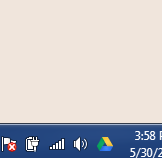
Click
on the little drive icon and then select "preferences" from the
"…"

Put
a check mark on the files you want downloaded.
Google will keep the unchecked stuff in the cloud, and everything else
will be deleted from your computer. I
did this recently to delete everything from this school year from the computer
and keep only the coming school year.
Really useful.
Google Docs/Sheets/Forms
I am a physicist,
therefore I LOVE SPREADSHEETS. There's
also a lot of cool options, like calendars, to-do lists and other templates
that are fun to play with. I recommend
just playing with them on your own.
So the thing that I
will use more this coming year are forms.
There are some crazy easy to use new features to make it more like a
quiz or just compile data. The big way
I'm going to use them this coming year is as questionnaires for various data
that I really need to collect, like your basic beginning of the year stuff,
submitting videos or other websites to add to the resource site and to collect
information for letters of recommendation.
As a high school teacher, most of my fall weekends are taken up by
writing letter upon letter of recommendation, and they can start to sound the
exactly the same. By collecting really
in depth data from the students, you can write an even stronger letter. Also, this will put all of the letter of
recommendation information in one place.
Which is insanely useful. I just
started using forms, so hopefully I'll utilize them more this year.
Google Calendar
Make appointment
slots. Seriously, do it. Why?
Because then if a student shows up at your door, you can tell them it's
not a good time and to make an appointment.
It's also a fast way to tell students you are busy at a certain time and
not to stop by. It sends them reminders
so they aren't late and they can tell you what they need in that
appointment. It's amazing. Just make sure they can find the link. Also, tell them they have to make the appointment
a day before. They'll do this thing
where they'll make an appointment the day of.
It's very frustrating, but stand your ground. It also gives students equal air time in 15
minute increments. It's awesome.
In Conclusion
Google is an
incredibly powerful tool of organization, and I've only scratched the surface
of what apps exist. I went for the basic
Google Apps for Education. If you have
any other cool tricks, let me know. I
always want to try more stuff out.
Wednesday, May 24, 2017
When You Need a Break
It's May, we all have those days. You have the mountain of grading staring you dead in the eye that needs to get done. You are just feeling so unmotivated thanks to months of grinding through material. Teacher fatigue happens to the best of us. Now, what will you do about it? One of the most important things to remember is teaching is mentally, physically and emotionally draining and self care is paramount. Let's talk about lazy days.
Project Work Days
Here's the rub with this one: while the day itself can often not be too mentally taxing, the lead up takes a lot of work. The project needs to be rigorous enough that it makes sense to give the time. Once you have that project though, turn on some music and turn them loose. This one works well for me mentally and in terms of pedagogy. I'm a constructivist for those who have read a lot of teacher academic writing. I believe, especially in science, in letting students explore and make discoveries. This allows the ideas to stick a lot stronger. And project based learning is great for that. So pros: lots of independence. Cons: Lots of prep and planning.
Find Those Best Science (or Your Own Subject) Movies
For biology, I feel like you can't go wrong with Planet Earth or with the Disney line of movies. Also, Bill Nye never goes out of style. His new show has a lot that is applicable to current science classes, and I can see turning one of the episodes into a pretty in depth discussion. In particular, the last episode in the Netflix series can be a great intro to scientific method and can help alleviate that beginning of the year exhaustion.
The ultimate for my physics people is definitely Neil Degrasse Tyson's Cosmos. The information is great, visuals are good and is overall an enjoyable romp. I'm a fan. Plus, there are oodles of online resources in terms of worksheets to use for all the above. Or, you could use the videos as some sort of evidence for a written assignment. Also a good idea.
Another great way to bring in student voice is have them create videos as a project and then show them in class. Less reading for you overall, and they love to see each other. While they sometimes hate watching their own product, if a student is anxious, they can sit outside. Also having strong presentation or video class norms is imperative. This also makes grading crazy easy. Just have the rubrics in front of you while the video is playing and there you go, all done. Rubrics, I think, over anything else have allowed me to give timely feedback by grading quickly and having clear standards. By no means do I think I write great rubrics, but I'm getting better at it through collaboration with colleagues.
The Post Test Day
My master teacher back in the day would always show a fun movie the day after the test. Why? To grade the damn test. She would use that time for kids to compile their stuff from the unit to put into their portfolios and do the reflection. I kind of wish I felt like I had the time to do this, and someday I might give the post test day its due. As of right now, however, I kind of do this on the actual test day in some form. However, it was a nice chunk of time to just crunch out the tests and allow students to organize themselves and reflect on what we learned that unit.
Project Work Days
Here's the rub with this one: while the day itself can often not be too mentally taxing, the lead up takes a lot of work. The project needs to be rigorous enough that it makes sense to give the time. Once you have that project though, turn on some music and turn them loose. This one works well for me mentally and in terms of pedagogy. I'm a constructivist for those who have read a lot of teacher academic writing. I believe, especially in science, in letting students explore and make discoveries. This allows the ideas to stick a lot stronger. And project based learning is great for that. So pros: lots of independence. Cons: Lots of prep and planning.
Find Those Best Science (or Your Own Subject) Movies
For biology, I feel like you can't go wrong with Planet Earth or with the Disney line of movies. Also, Bill Nye never goes out of style. His new show has a lot that is applicable to current science classes, and I can see turning one of the episodes into a pretty in depth discussion. In particular, the last episode in the Netflix series can be a great intro to scientific method and can help alleviate that beginning of the year exhaustion.
The ultimate for my physics people is definitely Neil Degrasse Tyson's Cosmos. The information is great, visuals are good and is overall an enjoyable romp. I'm a fan. Plus, there are oodles of online resources in terms of worksheets to use for all the above. Or, you could use the videos as some sort of evidence for a written assignment. Also a good idea.
Another great way to bring in student voice is have them create videos as a project and then show them in class. Less reading for you overall, and they love to see each other. While they sometimes hate watching their own product, if a student is anxious, they can sit outside. Also having strong presentation or video class norms is imperative. This also makes grading crazy easy. Just have the rubrics in front of you while the video is playing and there you go, all done. Rubrics, I think, over anything else have allowed me to give timely feedback by grading quickly and having clear standards. By no means do I think I write great rubrics, but I'm getting better at it through collaboration with colleagues.
The Post Test Day
My master teacher back in the day would always show a fun movie the day after the test. Why? To grade the damn test. She would use that time for kids to compile their stuff from the unit to put into their portfolios and do the reflection. I kind of wish I felt like I had the time to do this, and someday I might give the post test day its due. As of right now, however, I kind of do this on the actual test day in some form. However, it was a nice chunk of time to just crunch out the tests and allow students to organize themselves and reflect on what we learned that unit.
Wednesday, May 17, 2017
End of My Third Year
There's this feeling in teaching that once you make it to your third year, you're really a teacher. You've had your first two bumpy years to work things out, and now you have figured out your methods and voice as an educator. That is, if you stay at the same school.
Between my second and third years, I switched schools. Districts, in fact. I went from teaching in the Bayview to the heart of Silicon Valley down the street from where I grew up. While I am now teaching in my community, both where I currently live and where I am from, there are some challenges that come from changing schools, just like changing any job. From discussing this with friends, it takes about 5 weeks to get the hang of a new company and feel secure. In teaching, because things change so often throughout the year, you don't feel comfortable until the year is over. And even then, you still feel like you have a lot to learn. Plus, the next year, you get new kids.
With all of this, I think I still improved as a teacher. I had better classroom management and organizing things as well as posting grades more consistently. However, I feel like there are a lot of new tricks I want to steal from coworkers in terms of homework return and test and quiz retention. It's all about figuring out what is expected at the school, and how much students actually want their work back and what is realistic for me to do.
I've already gone through and figured out some new organization methods for work return and classroom set up. Something that hasn't changed is how messy students can be, so whatever I can do to minimize that (and keep myself organized), I will most certainly do. I think my strength as a teacher is being reflective. I look at how thing went (even as they are going) and think about how I can improve it. I will never think I am perfect. I don't think I will ever stop growing or learning as a teacher.
In the future, I hope to post more activities and ideas onto this blog, and less reflection of my practice as I move forward. I am planning on reorganizing my classroom and recording that here to hopefully help other teachers like me, especially science teachers, to keep themselves sane. Writing definitely helps, I can tell you that.
Between my second and third years, I switched schools. Districts, in fact. I went from teaching in the Bayview to the heart of Silicon Valley down the street from where I grew up. While I am now teaching in my community, both where I currently live and where I am from, there are some challenges that come from changing schools, just like changing any job. From discussing this with friends, it takes about 5 weeks to get the hang of a new company and feel secure. In teaching, because things change so often throughout the year, you don't feel comfortable until the year is over. And even then, you still feel like you have a lot to learn. Plus, the next year, you get new kids.
With all of this, I think I still improved as a teacher. I had better classroom management and organizing things as well as posting grades more consistently. However, I feel like there are a lot of new tricks I want to steal from coworkers in terms of homework return and test and quiz retention. It's all about figuring out what is expected at the school, and how much students actually want their work back and what is realistic for me to do.
I've already gone through and figured out some new organization methods for work return and classroom set up. Something that hasn't changed is how messy students can be, so whatever I can do to minimize that (and keep myself organized), I will most certainly do. I think my strength as a teacher is being reflective. I look at how thing went (even as they are going) and think about how I can improve it. I will never think I am perfect. I don't think I will ever stop growing or learning as a teacher.
In the future, I hope to post more activities and ideas onto this blog, and less reflection of my practice as I move forward. I am planning on reorganizing my classroom and recording that here to hopefully help other teachers like me, especially science teachers, to keep themselves sane. Writing definitely helps, I can tell you that.
Wednesday, April 19, 2017
Paperless Grading: A Saga
I thought to myself "How hard can it be, to go paperless? Or at least decrease paper in the classroom? Easy peasy."
Ha. Hahahah. Ha.
So, let's go with the pros. It gives my students way more autonomy and access to materials. Worksheet with a video embedded? Yes please. Neat tools that are super fun to access? Don't mind if I do. Interactive rubrics? With a side of documents to be organized by a neat system. In theory, I should be streamlined more than a slick shaved swimmer. In theory.
But there is something to be said about the ticking time bomb that is a hard copy to a thing. It is much easier to have one physical object to represent a student. Then it gives you a hard timeline because you want that thing out of of your face. Without a thing in my face, I find it very difficult to get things done. What I used to get back to students quickly for feedback can now take up to a month or more. Occasionally, I will also have multiple assignments pile up on me and that can be entirely overwhelming.It's much more satisfying to decrease a pile than to fill in a spreadsheet. It became hard to feel like I had accomplished anything.
On the other hand, not having a pile of papers lets me keep my desk and classroom so much less cluttered with extra mess. Without hard copies of their projects, I don't have student work to put on the walls. Therefore, I only have nice science posters to post. Kind of nice and pretty really.
There are also a lot of programs to help expedite the grading process, like Doctopus and Goobric, which are now communicating much better with Google Classroom. And Google Classroom now communicates with our grading system, School Loop, so now grades (more or less) automatically fill in the gradebook on School Loop from Google Classroom.
While I feel like I'm getting the hang of the system as it exists, there are many modifications I would love to see. I would love for group projects to be easier to assign, grade and enter. On the developer side, I would love for the connection between School Loop and Google Classroom to be less glitchy. On my side of things, I want to make more webquests and autonomous discovery based assignments. I want to do things faster and better. So, off to a good start. I just want things to keep going.
Ha. Hahahah. Ha.
So, let's go with the pros. It gives my students way more autonomy and access to materials. Worksheet with a video embedded? Yes please. Neat tools that are super fun to access? Don't mind if I do. Interactive rubrics? With a side of documents to be organized by a neat system. In theory, I should be streamlined more than a slick shaved swimmer. In theory.
But there is something to be said about the ticking time bomb that is a hard copy to a thing. It is much easier to have one physical object to represent a student. Then it gives you a hard timeline because you want that thing out of of your face. Without a thing in my face, I find it very difficult to get things done. What I used to get back to students quickly for feedback can now take up to a month or more. Occasionally, I will also have multiple assignments pile up on me and that can be entirely overwhelming.It's much more satisfying to decrease a pile than to fill in a spreadsheet. It became hard to feel like I had accomplished anything.
On the other hand, not having a pile of papers lets me keep my desk and classroom so much less cluttered with extra mess. Without hard copies of their projects, I don't have student work to put on the walls. Therefore, I only have nice science posters to post. Kind of nice and pretty really.
There are also a lot of programs to help expedite the grading process, like Doctopus and Goobric, which are now communicating much better with Google Classroom. And Google Classroom now communicates with our grading system, School Loop, so now grades (more or less) automatically fill in the gradebook on School Loop from Google Classroom.
While I feel like I'm getting the hang of the system as it exists, there are many modifications I would love to see. I would love for group projects to be easier to assign, grade and enter. On the developer side, I would love for the connection between School Loop and Google Classroom to be less glitchy. On my side of things, I want to make more webquests and autonomous discovery based assignments. I want to do things faster and better. So, off to a good start. I just want things to keep going.
Saturday, October 15, 2016
Why Drawing is More Important Now Than Ever
I had a really
interesting conversation with a student a few days ago. We were swiftly approaching the big one: the Forces Test. In physics, this is kind of a Waterloo
moment, where the math really is based off of physical ideas in a way many
students (myself included) find incredibly challenging, especially in terms of
the normal force. (Aside: If someone else says 'natural force' to me
again whilst referring to normal force, I'm going to lose my mind.)
The point of all of
this is the fact that I have had multiple students come to me in near tears
because they are terrified of this exam.
They are normally A/B students who have found themselves getting a C or
D on exams that they have prepared for as they would for any exam in any other
class. Physics is a beast unto itself,
with things that may some logical but are incredibly difficult to define
mathematically. And this is an honors
class, which is just another layer of math on math on math. So, panic attacks have ensued and I have had
the responsibility to talk students back from the edge.
One such student
came in and told me their study habits, which is not uncommon for this
area. On average, after they finish
school they go to their after school sport and get home between 5 and 6 PM. Then, it is not uncommon to do homework until
10-11 PM. I can tell you as a teacher, I
don't make assignments that should take that long. Also, many students do work throughout breaks
in the day and so have 8 hours of classes and possibly 8 hours of
homework. This student also dedicated
their entire Saturday to my class.
So I did what any
adult would do: I asked the student what they do for fun. A big part of learning is letting your brain
rest. You need to take a moment to not
think on occasion, to do something enjoyable.
Your brain often will be still be churning through the question in the
background, but focusing on something else takes the pressure off. I think this is why I actually could engage
hardcore in art and science in college.
I would oscillate between the two because they were different parts of
my brain, and it allowed me a time to let something go in the background.
What the student
said scared me. Nothing. They do nothing for fun. I asked if they like to draw. The response was "Yes, I love it. But you can't make money doing
that." Which absolutely broke my
heart. I know where they are coming
from. Many parents in this area (mine
included) feel that creative arts jobs are not for their children. It's true that the jobs with stability are
hard to find, but they absolutely exist.
Also, you can still enjoy and profit from your hobbies.
So, to help
illustrate my point to my student, I took out my sketchbook for Inktober. I'm doing my best to do a draw every day this
month, and I find the challenge actually really inspiring. The look on the student's face as we flipped
through brightened. All my students can
see how hard I work and how much effort I put in, and yet I have given myself
time to enjoy a pastime. This, however,
doesn't help students see someone not just emotionally profit from drawing, but
financially profit as well.
And that’s when it
struck me. It's imperative that I keep
drawing and enjoying myself. It's easy
as a teacher to get sucked into just grinding all the time to keep up on grades
and to find new and exciting activities, but for me, creating something should
be a focus as well. And it's not just
for my own amusement, enjoyment and profit anymore. Teachers are inspirations to students, as
egotistical as it sounds. I want to be
able to tell my students I made something and made money from that. Or that I'm using my creativity or am proud
of something I made. Especially at a
school with so much talent and drive, I feel like I need to match that.
Sunday, March 20, 2016
Technology in my Classroom
So, we have best practice at every department meeting, and at a recent one, a coworker shared an app he uses called Zipgrade. Being the curious little science teacher I am, I decided to try and use it. This brings up a neat topic that I feel is becoming increasing relevant in this day and age: technology in the classroom. I actually did a project about it in graduate school, but I feel like it has become a more polarizing difference between teachers. I find myself straddling the line between pro-technology and wary of technology, but when it comes down to it, I like when things can save me time and effort. So, let me share with you a few tricks I've begun to compile while I experiment with apps, widgets and all that stuff.
Apps and Stuff
These are a combo of some apps for phone (both Android and iOS) and have some kind of computer interface to download and analyze data. If you are pretty good with Excel or Google Sheets, the process of setting up classrooms in these apps is pretty straight forward.
Zipgrade: I have a few apps I use for expediting the grading and analyzing of data. One of the newer ones I mentioned was Zipgrade. Through this program you can print out and grade, rather quickly honestly, scantron style multiple choice tests. You scan with your device and can then upload a file of grades to your grading system. Compared to how I grade a quiz of a comparable size, it takes about 1/3 of the time to grade and post grades to School Loop or whatever system you use. The set up process takes some time, and it took me a while to figure out the weighting component, but I loved it. That way, I never have to worry about using a scantron reader or entering grades by hand. I'm into it.
Doctopus: This is a mass copy system that works through Google docs. Basically, it can make a specific copy of a Google file for each student to use so they don't edit the original document you share with them. I use it mainly for rubrics for projects and lab reports so they can get feedback much faster. There's a plugin where you can speak your feedback as a recording, which is great for accessibility. There's a ton of stuff this one is capable of, I just haven't unlocked its full potential as of yet.
Socrative: This is one of my favorites for quick quizzes. Basically, you create an online quiz where students can answer either on their phone or on a computer. You can use it to create a quiz game, exit tickets, team up the students or keep it individual. The school I am currently at has a pretty strict no phones out policy, but in a classroom where you have Chromebooks or a less strict school phone policy, you could totally do a quiz game where they have rockets that shoot off into space as they get answers right. There is an app for students and an app for teachers. The teacher app can connect directly to your Google account and gives you a really comprehensive readout of what students have gotten correct and incorrect. A lot of this app is similar to Zipgrade, but it is free and has a free response option. However, in terms of assessment, it's good for formative, but for summative, I would lean towards Zipgrade due to the phone not being a part of the student interface. Taking a test on a phone with the internet so close is too much for me to handle.
Plickers: I'm trying this one soon with my freshmen. This is a good check for understanding tool where each student gets a specific QR code to use during class. You ask a question and scan for responses. I am excited about the anonymity it brings to students, the accountability for understanding and the ease in grading with another spread sheet like Socrative and Zipgrade. The thing I am not fully in love with, and this could be due to my inexperience with the app, is the organizational system. Zipgrade and Socrative both have questions organized in a quiz format. Plickers has the questions in a shared folder, so you have to choose the questions in your queue before each session as I see it now. Hopefully, I can figure a better system.
Overall, these are the apps I have found that work the best in my space or I'm excited to try out. If you have any experience with another system, please let me know. If you can't tell, I'm excited to test out anything that will make my life easier and allow me to give better feedback. I suck at giving work back in a timely manner.
Apps and Stuff
These are a combo of some apps for phone (both Android and iOS) and have some kind of computer interface to download and analyze data. If you are pretty good with Excel or Google Sheets, the process of setting up classrooms in these apps is pretty straight forward.
Zipgrade: I have a few apps I use for expediting the grading and analyzing of data. One of the newer ones I mentioned was Zipgrade. Through this program you can print out and grade, rather quickly honestly, scantron style multiple choice tests. You scan with your device and can then upload a file of grades to your grading system. Compared to how I grade a quiz of a comparable size, it takes about 1/3 of the time to grade and post grades to School Loop or whatever system you use. The set up process takes some time, and it took me a while to figure out the weighting component, but I loved it. That way, I never have to worry about using a scantron reader or entering grades by hand. I'm into it.
Doctopus: This is a mass copy system that works through Google docs. Basically, it can make a specific copy of a Google file for each student to use so they don't edit the original document you share with them. I use it mainly for rubrics for projects and lab reports so they can get feedback much faster. There's a plugin where you can speak your feedback as a recording, which is great for accessibility. There's a ton of stuff this one is capable of, I just haven't unlocked its full potential as of yet.
Socrative: This is one of my favorites for quick quizzes. Basically, you create an online quiz where students can answer either on their phone or on a computer. You can use it to create a quiz game, exit tickets, team up the students or keep it individual. The school I am currently at has a pretty strict no phones out policy, but in a classroom where you have Chromebooks or a less strict school phone policy, you could totally do a quiz game where they have rockets that shoot off into space as they get answers right. There is an app for students and an app for teachers. The teacher app can connect directly to your Google account and gives you a really comprehensive readout of what students have gotten correct and incorrect. A lot of this app is similar to Zipgrade, but it is free and has a free response option. However, in terms of assessment, it's good for formative, but for summative, I would lean towards Zipgrade due to the phone not being a part of the student interface. Taking a test on a phone with the internet so close is too much for me to handle.
Plickers: I'm trying this one soon with my freshmen. This is a good check for understanding tool where each student gets a specific QR code to use during class. You ask a question and scan for responses. I am excited about the anonymity it brings to students, the accountability for understanding and the ease in grading with another spread sheet like Socrative and Zipgrade. The thing I am not fully in love with, and this could be due to my inexperience with the app, is the organizational system. Zipgrade and Socrative both have questions organized in a quiz format. Plickers has the questions in a shared folder, so you have to choose the questions in your queue before each session as I see it now. Hopefully, I can figure a better system.
Overall, these are the apps I have found that work the best in my space or I'm excited to try out. If you have any experience with another system, please let me know. If you can't tell, I'm excited to test out anything that will make my life easier and allow me to give better feedback. I suck at giving work back in a timely manner.
Sunday, February 28, 2016
And Now the Positive Side to the Second Year
That blog post went dark. Pretty quickly. I wasn't feeling the best about myself at that time, and I decided to just clear out my brain. Which oddly helped. But the other side of that is that we need to fill in the space made by clearing out the bad by filling it in with something good. So, let's try and do this so those of you who may be younger teachers than I can feel like the world isn't all terrible.
You are a Better Teacher
This will not seem right at all. But believe me, when it comes down to it, you are better. Seriously. It may seem like on some days that all you can do is make mistakes, but they are mistakes that are not just because you are new. They are mistakes because this job is hard, and that's how you learn. Whenever I feel like poop, I listen to the Tarzan soundtrack from Disney and scream along with the "In learning you will teach, and in teaching you will learn" part. It ends with "all these things will come to you in time." Thank you, Phil Collins.
New Students
My first year, I had a group of students who pushed every button I had. I had to think on my feet so fast to just get through a day and get anything done. This year, thanks to those students, I feel like I knew what to kind of do if it came up again. Yes, there were many new challenges (see last post) but it has been wonderful to get to know a group of students and still see some of your old ones. New jokes, new lessons, new personalities. It has been a great year with these scientists, and I'm super proud to see how my past scientists are doing.
Honing New Skills
I make a conscious decision to get better at a thing a year. This year was being timely on updating the online grading, and I feel like I have generally become much stronger at that and I still have the skills I honed last year, like planning using Post-Its (shout out to all my teacher friends who showed me how to do this) and positive narration, but boy howdy did grading get to me. I've learned how to get as much grading done as humanly possible as fast as possible. I also learned the best thing for me, is to focus on that thing. I tried to implement a bunch of new tricks, and many of them no longer are being used. I figure I still have them, and the same thing happened last year until I kind of cracked those tricks this year. I figure when it comes down to it, I'll keep learning a new trick a year and that's pretty fantastic.
People Know Your Name
I saved the best and least obvious for last. It is amazing your second year to have name recognition. I had to introduce myself last year or, in one case, hear someone ask my friend "who is Ms. S?" in front of me. Now, thanks to chaperoning a few field trips and word of mouth, I am kind of known at school. There are still batches of kids who have no idea who I am besides that mean lady who sends them back to class, but I have a way better relationship with other teachers. Which is to say, I have a relationship with the other teachers at all. I actually have some pretty great friends as a support network, and that I think may actually be the best part of being a second year teacher.
Yeah. This definitely helped. Hope it helps you too!
You are a Better Teacher
This will not seem right at all. But believe me, when it comes down to it, you are better. Seriously. It may seem like on some days that all you can do is make mistakes, but they are mistakes that are not just because you are new. They are mistakes because this job is hard, and that's how you learn. Whenever I feel like poop, I listen to the Tarzan soundtrack from Disney and scream along with the "In learning you will teach, and in teaching you will learn" part. It ends with "all these things will come to you in time." Thank you, Phil Collins.
New Students
My first year, I had a group of students who pushed every button I had. I had to think on my feet so fast to just get through a day and get anything done. This year, thanks to those students, I feel like I knew what to kind of do if it came up again. Yes, there were many new challenges (see last post) but it has been wonderful to get to know a group of students and still see some of your old ones. New jokes, new lessons, new personalities. It has been a great year with these scientists, and I'm super proud to see how my past scientists are doing.
Honing New Skills
I make a conscious decision to get better at a thing a year. This year was being timely on updating the online grading, and I feel like I have generally become much stronger at that and I still have the skills I honed last year, like planning using Post-Its (shout out to all my teacher friends who showed me how to do this) and positive narration, but boy howdy did grading get to me. I've learned how to get as much grading done as humanly possible as fast as possible. I also learned the best thing for me, is to focus on that thing. I tried to implement a bunch of new tricks, and many of them no longer are being used. I figure I still have them, and the same thing happened last year until I kind of cracked those tricks this year. I figure when it comes down to it, I'll keep learning a new trick a year and that's pretty fantastic.
People Know Your Name
I saved the best and least obvious for last. It is amazing your second year to have name recognition. I had to introduce myself last year or, in one case, hear someone ask my friend "who is Ms. S?" in front of me. Now, thanks to chaperoning a few field trips and word of mouth, I am kind of known at school. There are still batches of kids who have no idea who I am besides that mean lady who sends them back to class, but I have a way better relationship with other teachers. Which is to say, I have a relationship with the other teachers at all. I actually have some pretty great friends as a support network, and that I think may actually be the best part of being a second year teacher.
Yeah. This definitely helped. Hope it helps you too!
Wednesday, February 17, 2016
Second Year Teaching
As you can see by my crazy consistent posting, teaching as a second year teacher has been tough. And, being the loving and generous author I am, I want to walk you through why it is so tough subject by subject.
All New Kids
Ok, this one sounds like a no brainer, but as a 1st year teacher, you find tricks that work with your group of quiz. Talking out of turn? Participation points. Oodles of latework? Ironclad latework policy second semester. Basically, everything you came up with is tailored to that group of students and their needs and idiosyncrasies. In my case, I had a sweet but chatty group of freshmen, so a lot of the management tools I had to use were based around talking out of turn. This year, I have some personalities. While they are still talkative, they are not quite as sweet about it. There is a great deal more time spent dealing with negative interactions or trying to dissuade really inappropriate language and conversations. This is a very different challenge and requires a different skill set.
There's a flip side to this, of course. In some cases, your following class benefits from your previous knowledge. You'll find you can explain certain things way better if you were able to teach the same lessons both years. However, many teachers I have known have had the most change in curriculum the first two years. Even if you feel you have a strong set of lessons and activities, things happen. Materials can run out, maybe your students are more or less advanced or maybe you just do not like how it addressed the standards previously and need to tweak it. No matter what, changes are tough and you'll have a lot of them.
People Expect More of You
Especially if you don't change schools, you have proven that you can be a contributing part of the community. Mainly, you survived. And in some cases, this means you will find yourself in a leadership position, whether you feel ready or not. In some ways, this can be fantastic. You can really see how a school works and gain some great experience. In some ways, this can be exhausting. Seeing how a school works makes you realize how many moving parts there really are. It makes your really respect all the administration do.
Also, expectations of abilities of teachers increases greatly. I relate it to how the expectations jump for students from middle school to high school, even if they really don't mature that much over the summer. You will be expected to be just better overall, and in many ways, you will be. You'll find tricks to grade more efficiently, you'll get better at doing things on time, you'll be better about contacting families and managing a classroom, but you by no means will be perfect or meet the expectations of others sometimes.
People also expect you to know more things. I have now been part of a few research projects, so if you need a good interview, you know who to look for. Answer: it may not be me. While I do have some knowledge, it's very narrow and specific. And yet, people love to study second year teachers. Maybe it's a sophomore situation. You are just starting to know how much you don't know.
You Expect More of You
I am my own hardest critic. Whenever I have observations or evaluations, I see everything going wrong in the space and none of what is going right. I tell myself that these things that are happening should not be issues any more. My brain says "YOU HAVE DONE THIS BE PERFECT" and yet, I can't. There's only so much 'can' in my body and sometimes, I run out. I think this leads well into the fact that I have way less patience now with students and with myself.
You Have Way Less Patience
Yeah, remember how tired you were last year? Multiply that by two. You will have all of the baggage of prior students as well as current and almost no way to handle it constructively. Ok, I'm exaggerating, but that's what it feels like a lot of the time. I have not learned how to let some things slide, or I feel bad because I am letting more slide or mad because I take work home mentally and physically. I feel like I had this youthful exuberance last year like YAY I'M A REAL TEACHER and now I sometimes just feel old and frustrated. I'm also a bit of an idiot and made like three major life changing decisions in the span of the last six months (marriage, moving, job) and so I am really, really in my bones tired. I don't know if anyone but my dad and my fiance really can see how tired I am. I think I thought it would go away this year, and in some ways it has been less severe, but then I had to go and add on more stuff to do. So this may be less about being a second year teacher, and more about just being me.
While all of this looks like a bunch of sadness and complaining, I do think I have improved but I just needed to vent. I think I just needed this moment. Positives to follow.
All New Kids
Ok, this one sounds like a no brainer, but as a 1st year teacher, you find tricks that work with your group of quiz. Talking out of turn? Participation points. Oodles of latework? Ironclad latework policy second semester. Basically, everything you came up with is tailored to that group of students and their needs and idiosyncrasies. In my case, I had a sweet but chatty group of freshmen, so a lot of the management tools I had to use were based around talking out of turn. This year, I have some personalities. While they are still talkative, they are not quite as sweet about it. There is a great deal more time spent dealing with negative interactions or trying to dissuade really inappropriate language and conversations. This is a very different challenge and requires a different skill set.
There's a flip side to this, of course. In some cases, your following class benefits from your previous knowledge. You'll find you can explain certain things way better if you were able to teach the same lessons both years. However, many teachers I have known have had the most change in curriculum the first two years. Even if you feel you have a strong set of lessons and activities, things happen. Materials can run out, maybe your students are more or less advanced or maybe you just do not like how it addressed the standards previously and need to tweak it. No matter what, changes are tough and you'll have a lot of them.
People Expect More of You
Especially if you don't change schools, you have proven that you can be a contributing part of the community. Mainly, you survived. And in some cases, this means you will find yourself in a leadership position, whether you feel ready or not. In some ways, this can be fantastic. You can really see how a school works and gain some great experience. In some ways, this can be exhausting. Seeing how a school works makes you realize how many moving parts there really are. It makes your really respect all the administration do.
Also, expectations of abilities of teachers increases greatly. I relate it to how the expectations jump for students from middle school to high school, even if they really don't mature that much over the summer. You will be expected to be just better overall, and in many ways, you will be. You'll find tricks to grade more efficiently, you'll get better at doing things on time, you'll be better about contacting families and managing a classroom, but you by no means will be perfect or meet the expectations of others sometimes.
People also expect you to know more things. I have now been part of a few research projects, so if you need a good interview, you know who to look for. Answer: it may not be me. While I do have some knowledge, it's very narrow and specific. And yet, people love to study second year teachers. Maybe it's a sophomore situation. You are just starting to know how much you don't know.
You Expect More of You
I am my own hardest critic. Whenever I have observations or evaluations, I see everything going wrong in the space and none of what is going right. I tell myself that these things that are happening should not be issues any more. My brain says "YOU HAVE DONE THIS BE PERFECT" and yet, I can't. There's only so much 'can' in my body and sometimes, I run out. I think this leads well into the fact that I have way less patience now with students and with myself.
You Have Way Less Patience
Yeah, remember how tired you were last year? Multiply that by two. You will have all of the baggage of prior students as well as current and almost no way to handle it constructively. Ok, I'm exaggerating, but that's what it feels like a lot of the time. I have not learned how to let some things slide, or I feel bad because I am letting more slide or mad because I take work home mentally and physically. I feel like I had this youthful exuberance last year like YAY I'M A REAL TEACHER and now I sometimes just feel old and frustrated. I'm also a bit of an idiot and made like three major life changing decisions in the span of the last six months (marriage, moving, job) and so I am really, really in my bones tired. I don't know if anyone but my dad and my fiance really can see how tired I am. I think I thought it would go away this year, and in some ways it has been less severe, but then I had to go and add on more stuff to do. So this may be less about being a second year teacher, and more about just being me.
While all of this looks like a bunch of sadness and complaining, I do think I have improved but I just needed to vent. I think I just needed this moment. Positives to follow.
Friday, July 10, 2015
Animating and Physics
I just realized that, while my title has both animation and education, this has been fairly one sided. So, for my new Exploratorium followers that I name dropped this blog to (Hi!), this is for you.
First, the basics of animation. A really great video to start with is a Ted Talk on animation. It shows some cool examples of different types, because I feel people forget that animation is not just Mickey Mouse.
What I do in my class is show them the basics of animation and then talk about vectors. The powerpoint, as I went over it in a demo, needs a lot of work, but the basic idea is fun. Students need to be able to add the velocity vectors to the bouncing ball path as well as acceleration vectors. A common issue with acceleration in this case is that students forget what acceleration they're really working with and which direction. After this assessment, they seemed to understand better about vectors and gravity.
Animation Presentation
Basically:
1. Introduce animation
2. Discuss vectors
3. Practice with bouncing ball
4. Add colorful vectors to bouncing ball
What you end up with is some really cool artwork for the classroom.
First, the basics of animation. A really great video to start with is a Ted Talk on animation. It shows some cool examples of different types, because I feel people forget that animation is not just Mickey Mouse.
What I do in my class is show them the basics of animation and then talk about vectors. The powerpoint, as I went over it in a demo, needs a lot of work, but the basic idea is fun. Students need to be able to add the velocity vectors to the bouncing ball path as well as acceleration vectors. A common issue with acceleration in this case is that students forget what acceleration they're really working with and which direction. After this assessment, they seemed to understand better about vectors and gravity.
Animation Presentation
Basically:
1. Introduce animation
2. Discuss vectors
3. Practice with bouncing ball
4. Add colorful vectors to bouncing ball
What you end up with is some really cool artwork for the classroom.
Friday, May 22, 2015
Graduation Station
Well it's official. I have a Master's in Education. Does that feel like a good life choice? Yes. Does going to the commencement ceremony...? Yes and no.
First, I forgot I went to a Jesuit school. While I think what the Jesuit order is all about is really groovy, I'm not terribly religious any more. So the faith based speakers didn't quite inspire me to be the change I want to see in the world.
Oddly enough, I think graduation reminded me of how insulated from the world I've become. Being a teacher, it's easy to hole yourself away in a classroom and forget that there is something out there. I spend so much time thinking or worrying about students that, frankly, my social life is coming home and watching Daredevil with my boyfriend. Which is an awesome show, by the way. I talk more to teachers and kids than mundanes only a daily basis, so I forget that not everyone's world rotates around what this kid did when and why. I'm hoping next year, when my classroom is actually inside the main building, I may have a few more connections, but I'm not holding my breath.
Why this came into such stark view was when I saw my friends being closer friends with everyone but me. I'm an introvert, and I'm ok with that. However, it does feel icky when you're the 17th wheel in a group you used to be an integral part of. I guess graduation is a way of reminding you it's time to move on, to the next part or the next thing. It's closing a book, putting on the shelf and finding something new. It can be related, or completely different. For me, this book has been winding down for a while. I know I'll still be friends with all of these people, and I still am. They will be characters in my next book, but maybe not quite as prominent as they were in this one. I think my next book is going to be a sequel, to be honest.
I don't like the phrase next chapter. That assumes that the narrative is directly related and the story has no resolution. Graduate school has a resolution. I graduated. I took pictures. Yay. Now, it's time for the new story, but it's not unrelated, hence sequel. All of the lessons from my last phase will be applied with vigor to the next, even more than between college and graduate school.
Undergrad to graduate school were incredibly different, in both population, content and focus. Undergrad was about me learning what I wanted when I wanted and enjoying life. Graduate school was learning how to serve others and relate my knowledge in a way that others can understand. Also, it was way more writing. Not going to lie, I miss problem sets. Also, I spent the last two years in the company of teachers, who are definitely my people. I don't fit, but I fit slightly better than in college.
Anyway, this got off topic quickly. Graduation: it's about moving forward. Which is why I'm kind of moving backward and focusing on art again for a while. It's something I haven't focused on in 3 years, so I suppose I should. Plus, I need a hobby this summer. I can't NOT do something.
I'm happy I'm a teacher, and with the choices I've made, which is always a good sign. This next phase is going to be difficult, amazing, challenging and a bit undirected, a change for me. I'll figure it out, one way or another.
First, I forgot I went to a Jesuit school. While I think what the Jesuit order is all about is really groovy, I'm not terribly religious any more. So the faith based speakers didn't quite inspire me to be the change I want to see in the world.
Oddly enough, I think graduation reminded me of how insulated from the world I've become. Being a teacher, it's easy to hole yourself away in a classroom and forget that there is something out there. I spend so much time thinking or worrying about students that, frankly, my social life is coming home and watching Daredevil with my boyfriend. Which is an awesome show, by the way. I talk more to teachers and kids than mundanes only a daily basis, so I forget that not everyone's world rotates around what this kid did when and why. I'm hoping next year, when my classroom is actually inside the main building, I may have a few more connections, but I'm not holding my breath.
Why this came into such stark view was when I saw my friends being closer friends with everyone but me. I'm an introvert, and I'm ok with that. However, it does feel icky when you're the 17th wheel in a group you used to be an integral part of. I guess graduation is a way of reminding you it's time to move on, to the next part or the next thing. It's closing a book, putting on the shelf and finding something new. It can be related, or completely different. For me, this book has been winding down for a while. I know I'll still be friends with all of these people, and I still am. They will be characters in my next book, but maybe not quite as prominent as they were in this one. I think my next book is going to be a sequel, to be honest.
I don't like the phrase next chapter. That assumes that the narrative is directly related and the story has no resolution. Graduate school has a resolution. I graduated. I took pictures. Yay. Now, it's time for the new story, but it's not unrelated, hence sequel. All of the lessons from my last phase will be applied with vigor to the next, even more than between college and graduate school.
Undergrad to graduate school were incredibly different, in both population, content and focus. Undergrad was about me learning what I wanted when I wanted and enjoying life. Graduate school was learning how to serve others and relate my knowledge in a way that others can understand. Also, it was way more writing. Not going to lie, I miss problem sets. Also, I spent the last two years in the company of teachers, who are definitely my people. I don't fit, but I fit slightly better than in college.
Anyway, this got off topic quickly. Graduation: it's about moving forward. Which is why I'm kind of moving backward and focusing on art again for a while. It's something I haven't focused on in 3 years, so I suppose I should. Plus, I need a hobby this summer. I can't NOT do something.
I'm happy I'm a teacher, and with the choices I've made, which is always a good sign. This next phase is going to be difficult, amazing, challenging and a bit undirected, a change for me. I'll figure it out, one way or another.
Monday, December 8, 2014
The Most...Stressful Time of Year
This is my first year teaching. I think I should start out with that. This has also become one of the hardest, most stressful, amazing years of my life. High highs and low lows.
So what am I currently writing about. Well, I figure I wan to remember some lessons learned this year. What's the first thing I learned?
Be ok with not finishing things perfectly. I am a perfectionist by nature, which made this year begin in an incredibly difficult place. I wanted to be the best. And you know what I learned? I just need to be the best I can be and that means being ok with not being perfect and move on and learn from my mistakes. Yup, growth mindset for the win.
Lesson the second: Rest. When I was in college, I would pulled all-nighters like whoa, or stay up as late as possible to work and succeed and understand. Now, I know that sleeping is way more important than finishing work. I need my me-time. Or I will become unhinged. Which helps absolutely no one.
I also realized that this is the most open minded I will ever be in my life. And I need to cherish that.
So what am I currently writing about. Well, I figure I wan to remember some lessons learned this year. What's the first thing I learned?
Be ok with not finishing things perfectly. I am a perfectionist by nature, which made this year begin in an incredibly difficult place. I wanted to be the best. And you know what I learned? I just need to be the best I can be and that means being ok with not being perfect and move on and learn from my mistakes. Yup, growth mindset for the win.
Lesson the second: Rest. When I was in college, I would pulled all-nighters like whoa, or stay up as late as possible to work and succeed and understand. Now, I know that sleeping is way more important than finishing work. I need my me-time. Or I will become unhinged. Which helps absolutely no one.
I also realized that this is the most open minded I will ever be in my life. And I need to cherish that.
Subscribe to:
Posts (Atom)